
Immigration laws and court decisions are changing quickly. Here are some important updates that may affect you or your loved ones.
SCOTUS Affirms Birthright Citizenship
Trump v. Barbara, et. al.
What happened?
On June 30, 2026, the Supreme Court affirmed birthright citizenship, holding that children "born in the United States to parents unlawfully or temporarily present are 'subject to the jurisdiction' of the United States and are citizens at birth" under the 14th Amendment's birthright citizenship clause. The ruling invalidates Executive Order 14160, issued on Jan. 20, 2025, Trumps first day in office, which attempted to end birthright citizenship for children born in the United States to parents unlawfully present or present lawfully but only temporarily.
Although Justice Kavanaugh agreed with the decision, he did so on statutory grounds that it violated 8 U. S. C. §1401(a) not constitutional grounds, a position that could leave space for Congress to restrict birthright citizenship through legislation.
Who is affected?
U.S. Citizens who were born in the United States to parents who did not have lawful status at the time of their birth or were in the U.S. temporarily.
What does this mean?
Every individual born in the United States regardless of the immigration status of their parents are in fact and by law U.S. Citizens. The government is asking for a rehearing and Congress may consider legislation, but until then anyone born in the United States citizenship is protected.
Federal Court Protects Immigrants Attending Court
Pablo Sequen v. Albarran
What happened?
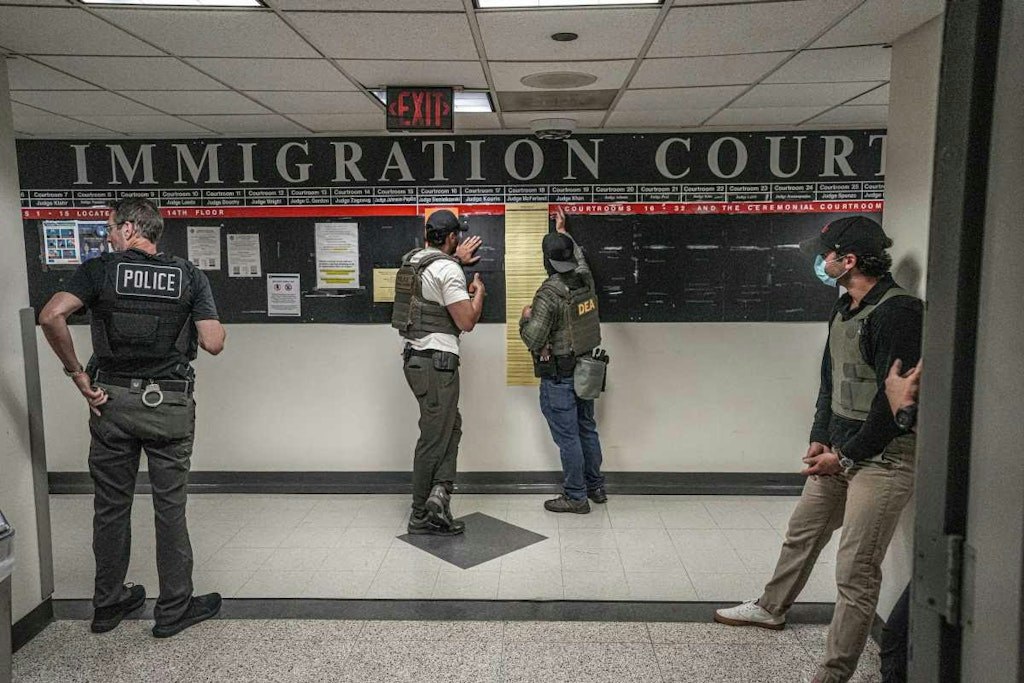
A federal court ruled that ICE cannot arrest certain people simply because they are attending court proceedings covered by the court's order. The decision is intended to protect access to the courts and reduce fear that people will be arrested while appearing for required court hearings.
Who is affected?
This decision may protect some people who are attending court as required. However, the ruling does not apply to every person or every courthouse.
What does this mean?
If you have a court hearing, do not skip it because you are afraid. Instead, speak with your attorney before your court date so you understand your rights and any possible risks.
D.C. Circuit Allows Expedited Removal for Interior Arrests Within Two Years of Entry
Make the Road New York v. Mullin
What happened?
On June 23, 2026, the D.C. Circuit held that DHS's policy expanding the use of expedited removal nationwide to certain noncitizens unable to demonstrate at least two years of continuous physical presence in the United States, likely did not violate due process.
Who is affected?
Any individual subject to enforcement with the Department of Homeland Security and has resided in the U.S. for less than two years and does not have legal status.
What does this mean?
Individuals present in the United States without status must prioritize gathering evidence of continuous physical presence in order to demonstrate these expedited removal policies do apply to them.
Court Vacates USCIS Adjudication Hold and Re-Review Policies
Dorcas International v. USCIS
What happened?
On June 5, 2026, a U.S. District Court vacated four USCIS policies that imposed adjudication holds, enhanced review procedures, and negative discretionary considerations for certain noncitizens from countries subject to travel-ban restrictions. The court held that the Global Asylum Hold Policy, Benefits Hold Policy, Comprehensive Re-Review Policy, and Country-Specific Factors Policy violated the Administrative Procedure Act because they were contrary to law and arbitrary and capricious.
The court concluded that USCIS lacked statutory and regulatory authority to implement the challenged policies and had improperly extended national-security concerns into immigration benefit adjudications. The court further found that the agency failed to provide a reasoned explanation for the policies, did not adequately consider the significant reliance interests of applicants whose cases were delayed or suspended, and relied on a national-security rationale that was not supported by the administrative record.
Who is affected?
Individuals from the following travel ban countries with pending applications before USCIS: Afghanistan, Burma, Chad, Republic of the Congo, Equatorial Guinea, Eritrea, Haiti, Iran, Libya, Somalia, Sudan, Yemen, Burkina Faso, Laos, Mali, Niger, Sierra Leone, South Sudan, Syria, Burundi, Cuba, Togo, Venezuela, Angola, Antigua and Barbuda, Benin, Cote d ‘Ivoire, Dominica, Gabon, The Gambia, Malawi, Mauritania, Nigeria, Senegal, Tanzania, Tonga, Zambia, and Zimbabwe.
What does this mean?
On June 12, USCIS issued a news alert asserting that it will comply with the June 5 order. USCIS should begin to adjudicate affirmative asylum applications, as well as applications for other benefits for applicants from the 39 travel ban-affected countries. Officers should not be using country-specific discretionary factors against individual applicants. Applicants should be prepared to cite the order and USCIS' news alert to object to non-compliance.
District Court Vacates $100,000 H-1B Supplemental Fee; Fee Remains in Effect Pending First Circuit Review
State of California v. Mullin
What happened?
On June 8, 2026, the U.S. District Court for the District of Massachusetts vacated the federal government's policy requiring employers filing new H-1B petitions to pay a $100,000 supplemental fee nationwide. The court held that the payment functioned as a tax rather than a permissible immigration fee and concluded that the president does not have the authority to impose such a tax.
Who is affected?
U.S. employers and multinational corporations that file H-1B visa petitions for foreign workers residing outside the United States
What does this mean?
Despite the court’s order, the government appealed the decision and filed an emergency motion to stay pending appeal. Therefore, the $100,000 supplemental fee requirement remains in effect until further action is taken by the First Circuit Court of Appeals.
What happened?
On June 8, 2026, the U.S. District Court for the District of Massachusetts vacated the federal government's policy requiring employers filing new H-1B petitions to pay a $100,000 supplemental fee nationwide. The court held that the payment functioned as a tax rather than a permissible immigration fee and concluded that the president does not have the authority to impose such a tax.
Who is affected?
U.S. employers and multinational corporations that file H-1B visa petitions for foreign workers residing outside the United States
What does this mean?
Despite the court’s order, the government appealed the decision and filed an emergency motion to stay pending appeal. Therefore, the $100,000 supplemental fee requirement remains in effect until further action is taken by the First Circuit Court of Appeals.
Supreme Court Allows Government to Turn Away Some Asylum Seekers at the Border
Mullin v. Al Otro Lado
What happened?
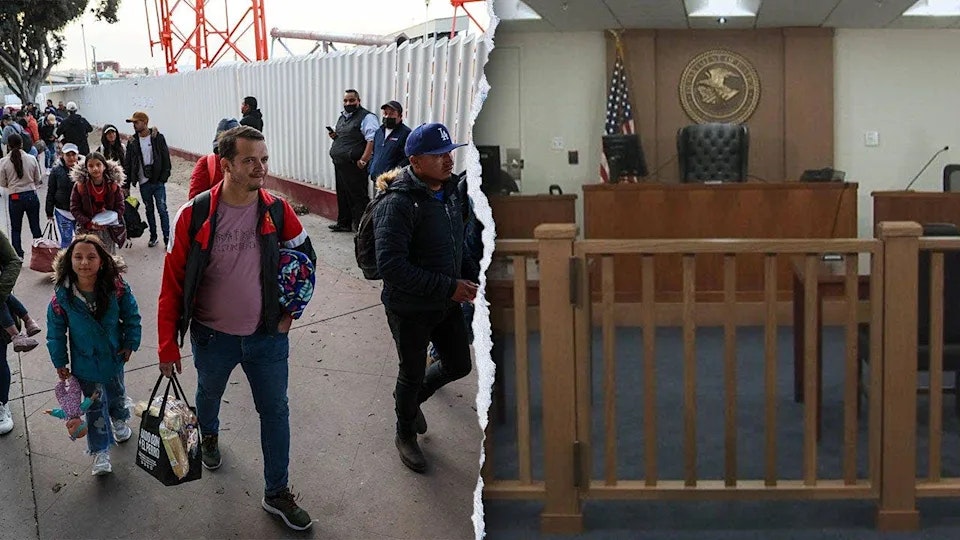
The U.S. Supreme Court ruled that the federal government can continue denying many
asylum seekers the chance to ask for asylum at ports of entry along the U.S.-Mexico
border under the challenged policy. The Court found that people who are still outside
the United States generally cannot use U.S. courts to challenge these decisions.
An individual standing in Mexico does not “arrive in the United States” by attempting,
and failing, to set foot in this country. An individual “arrives in the United States” only
when he crosses the border. The INA thus neither entitles an individual standing in
Mexico to apply for asylum nor requires an immigration officer to inspect him.
Who is affected?
- People seeking asylum at the U.S.-Mexico border.
-Families waiting outside the United States to request protection.
What does this mean?
It may be harder for people outside the United States to ask for asylum at a port of
entry. Every person's situation is different, so it is important to speak with an immigration
attorney before making travel plans or presenting yourself at the border.
Supreme Court Decision About Green Card Holders Returning to the United States
Blanche v. Lau
What happened?
The Supreme Court ruled that immigration officers do not need "clear and convincing evidence" that a returning lawful permanent resident committed a crime before treating that person as someone seeking admission into the United States. The government may later try to prove the case during immigration proceedings.
Who is affected?
- Lawful permanent residents (green card holders).
- Especially those with pending criminal charges or criminal convictions who travel outside the United States.
What does this mean?
If you have a green card and have been arrested, charged, or convicted of a crime, traveling outside the United States may carry greater immigration risks than before.
What should you do?
Do not travel internationally until you have spoken with an experienced immigration attorney.
Update on DACA Employment Authorization
It used to take the government as short as two weeks to process DACA renewals and work permits. Today, DACA renewal applications and work permits have reached an all-time high, taking more than six months to process in many cases. Therefore, individuals all across the country who filed their DACA applications within a reasonable time have yet to receive their work permits.
What does this mean? Because DACA work permit renewals don’t come with any automatic extension (in fact these automatic extensions don’t exist for anyone anymore), employers have been forced to terminate these employees. This has resulted in thousands of DACA recipients losing their jobs.
It’s important to know that the government has removed the restriction of filing a DACA renewal application more than 150 days (5 months) in advance. All of this to say, that if these processing times continue, going forward we suggest that DACA recipients file their renewals at least 6 months in advance. Yes, applicants may lose validity on their previous work permit authorization, but it minimizes the risk of losing their job. Check with an experienced immigration lawyer before you submit your renewal to check on processing times, because what is posted in theory is very different from reality.
Citizenship Application Fees Will Increase
What happened?
The federal government has announced higher filing fees for naturalization (citizenship) applications. The new fees are scheduled to take effect under a recent rule published in the Federal Register.
Who is affected?
Anyone planning to apply for U.S. citizenship.
What does this mean?
If you are eligible to become a U.S. citizen, filing your application sooner may help you avoid paying the higher fee once it becomes effective. If you are not sure whether you qualify for citizenship, our office can help review your eligibility.
Proactive Options for Delayed Cases Pending with USCIS
Sometimes there are situations where you can’t afford to wait the posted processing time for your immigrant application to be adjudicated. The processing time may be unreasonable and creating hardship. If your USCIS inquiry has produced no results, here are three options to consider:
- Request that your case be expedited. To qualify, you need to show one of the following: severe financial loss, an emergency or urgent humanitarian situation, work for a nonprofit organization that furthers a U.S. interest, have a reason that would satisfy U.S. government interest (federal, state of local agency request) or demonstrate USCIS error. However, it’s not enough to simply ask. You need documentation and evidence.
- Submit a Congressional Inquiry. Alternatively, you can contact your congressional representative (House or Senate) and ask them to submit an inquiry to USCIS. This generally requires your case to be outside of processing time or to have a good reason as to why you need to have your case processed sooner.
- File a writ of mandamus. Lastly, you can file a writ of mandamus in federal court, demanding that the federal government does its job processing your application in a reasonable and timely manner. This costs money and will likely need an experienced attorney to help you.
So if you are tired of waiting for your case to be processed or the extraordinarily long processing times are unreasonable, feel free to contact our office and schedule a consultation and let’s see what we can do to get your case back on track.
Remember
Immigration law changes often. A court decision today may be changed by another court tomorrow.
Before traveling outside the United States, applying for immigration benefits, or making important decisions about your case, speak with an experienced immigration attorney.
We're Here to Help
If you have questions about these updates or your immigration case, please contact our office. We are happy to discuss your options and help you understand how these changes may affect you and your family.